
Night-time is when reflux does its worst work. You lie down, gravity stops holding stomach acid where it belongs, and the burn that was a mild nuisance after dinner wakes you at 2 a.m. If that sounds familiar, the cause is often not what you ate — it is when, and how, you spent the evening. The American College of Gastroenterology notes that up to 20% of people in the US live with GERD, as of November 2026 — and for many of them, the night is the hardest part of the day. The good news is that several of the worst night-time habits are easy to change, and the fixes cost nothing.
Why does GERD get worse at night?
Because lying flat removes gravity, your main defence against reflux. When you stand or sit, gravity keeps stomach contents down; once you lie flat, acid can flow back into the oesophagus more easily, and it stays there longer because you swallow less and make less saliva while you sleep.
For the elevation options that fix this, see our bed wedge overview: https://www.bestwedgepillows.com/bed-wedges/
9 habits that make night-time GERD worse
Most night-time reflux is not one big mistake — it is a stack of small ones. Here are the nine habits that do the most damage after dark.
1. Eating within two to three hours of bedtime. A full stomach plus a flat bed is the classic reflux combination. The American College of Gastroenterology advises not eating for at least two hours before bed, and waiting two to three hours after a late meal before lying down. A smaller, earlier dinner is the single most effective change for many people.
2. A big, heavy evening meal. A large meal raises pressure inside the stomach, pushing contents upward against the valve at the bottom of the oesophagus. Eating your largest meal at lunch and keeping dinner lighter takes the pressure off — literally.
3. Trigger foods at dinner. The ACG lists the usual suspects: chocolate, coffee, peppermint, greasy or spicy foods, tomato products and alcoholic drinks. Some relax the valve; others irritate an already sore oesophagus. You do not have to give them all up — but a spicy tomato dinner followed by chocolate dessert stacks triggers.
4. Coffee or caffeine late in the day. Caffeine can relax the lower oesophageal sphincter, the valve that keeps acid down. An afternoon coffee is usually harmless; a coffee with dessert at 9 p.m. is not.
5. An evening drink. Alcohol both relaxes the valve and increases acid production, and the ACG lists stopping drinking as a core lifestyle recommendation for reflux. A nightcap is one of the worst-timed drinks for someone with GERD.
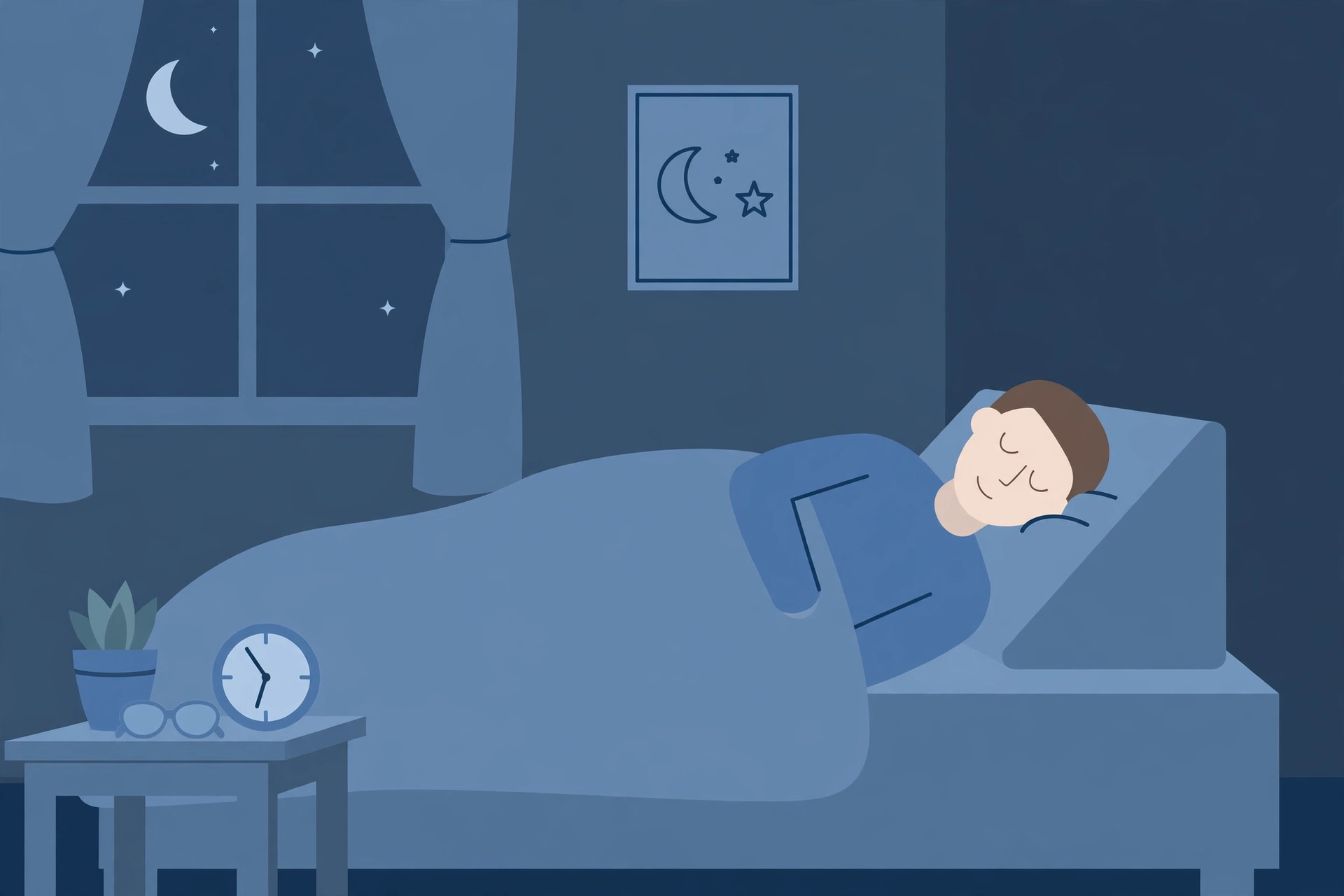
6. Lying flat to sleep. This is the habit that turns a mild evening into a bad night. Lying flat removes the gravity that protects you all day. The ACG recommends raising the head of the bed about 6 to 10 inches with an under-mattress wedge; ordinary pillows are not an effective substitute — they bend your neck instead of lifting your whole upper body. For how to choose the right height, see our guide to wedge pillow heights: https://www.bestwedgepillows.com/wedge-pillow-heights-explained-7-5-vs-10-vs-12-inches-for-reflux/
7. Sleeping on your right side. Patient guidance, including the Mayo Clinic’s heartburn advice, suggests starting the night on your left side: lying on your left keeps the stomach below the oesophagus, so acid is less likely to flow back. It is a small change, and it costs nothing to try.
8. Tight clothing at night. A tight waistband or snug pyjamas raise pressure inside the abdomen, pushing stomach contents upward. The ACG specifically advises avoiding tight clothing. Loose nightwear is not just comfort — it is part of the treatment.
9. Smoking before bed. Tobacco weakens the valve at the bottom of the oesophagus and is one of the biggest risk factors for oesophageal cancer, according to the ACG. A cigarette before bed is the worst way to end the day for reflux.
| Habit | Why it makes reflux worse | What helps instead |
|---|---|---|
| Eating close to bedtime | Full stomach, flat bed | Finish eating 2–3 hours before bed |
| Big evening meal | Pressure pushes acid upward | Largest meal at lunch, lighter dinner |
| Trigger foods at dinner | Relax the valve or irritate the oesophagus | Keep spicy, fatty and tomato dishes earlier in the day |
| Late caffeine | Relaxes the valve | Last coffee by mid-afternoon |
| Evening alcohol | Relaxes the valve, raises acid | Skip the nightcap |
| Lying flat | Gravity stops protecting you | Raise the head of the bed 6–10 inches |
| Sleeping on your right side | Stomach sits above the oesophagus | Start the night on your left side |
| Tight nightwear | Raises pressure in the abdomen | Loose pyjamas |
| Smoking before bed | Weakens the valve | Stop smoking — the single biggest change |
What actually helps at night?
Three things do most of the work. First, timing: finish eating two to three hours before bed and keep dinner moderate. Second, position: sleep with your whole upper body raised 6 to 10 inches, as of November 2026, and start on your left side. A wedge pillow or a raised bed head both do this; ordinary pillows do not, because they bend your neck rather than lifting your torso. If you are weighing the two approaches, our comparison of wedge pillows and adjustable beds lays out the costs and trade-offs: https://www.bestwedgepillows.com/wedge-pillow-vs-adjustable-bed-which-is-worth-it/
Third, know when habits are not enough. The ACG advises seeing a doctor if you need over-the-counter heartburn medicine more than twice a week, or if symptoms keep coming back despite lifestyle changes. Night-time reflux that wakes you regularly, causes choking, or brings on difficulty swallowing deserves a proper assessment.
It depends: which fixes matter most for you
If your reflux shows up only after a big or late meal, timing and trigger foods are probably enough — an earlier, lighter dinner may end the problem on its own. If it wakes you most nights no matter what you eat, elevation matters most, because no amount of careful eating restores the gravity you lose when you lie flat. And if you already sleep elevated and still wake up burning, talk to your doctor rather than keep adjusting pillows. The right answer depends on how often it happens and what sets it off. Change one habit at a time and notice what actually helps.
Frequently asked questions
Why is GERD worse at night?
Lying flat takes away gravity, your main protection against reflux, and while you sleep you swallow less and make less saliva, so acid that flows back stays in the oesophagus longer. That is why symptoms that are mild during the day can wake you at night.
Does sleeping on your left side really help?
Patient guidance from the Mayo Clinic suggests starting the night on your left side: on your left, the stomach sits below the oesophagus, so acid has further to travel. It does not work for everyone, but it is free to try.
How long before bed should I stop eating?
The American College of Gastroenterology advises at least two hours, and two to three hours after a late or large meal. A small snack is less of a problem than a full dinner, but a full stomach when you lie down raises the risk.
When should I see a doctor about night-time reflux?
See a doctor if you need over-the-counter heartburn medicine more than twice a week, if symptoms persist despite lifestyle changes, or if you have trouble swallowing, choking at night, or unexplained weight loss. Frequent heartburn can signal a more serious condition, and it is worth getting a proper diagnosis.
Sources
- American College of Gastroenterology, “Acid Reflux / GERD” — https://gi.org/topics/acid-reflux/ — trigger foods, eating 2–3 hours before bed, raising the head of the bed 6–10 inches, tight clothing, smoking, and when to see a doctor.
- Mayo Clinic, “7 ways to manage heartburn without medication” — https://www.mayoclinic.org/connected-care/7-ways-to-manage-heartburn-without-medication/cpt-20515431 — 6–9 inch head-of-bed elevation, elevating the whole upper body, sleeping on the left side.
This is general information, not medical advice. If your symptoms are frequent, severe or changing, speak to your doctor.