
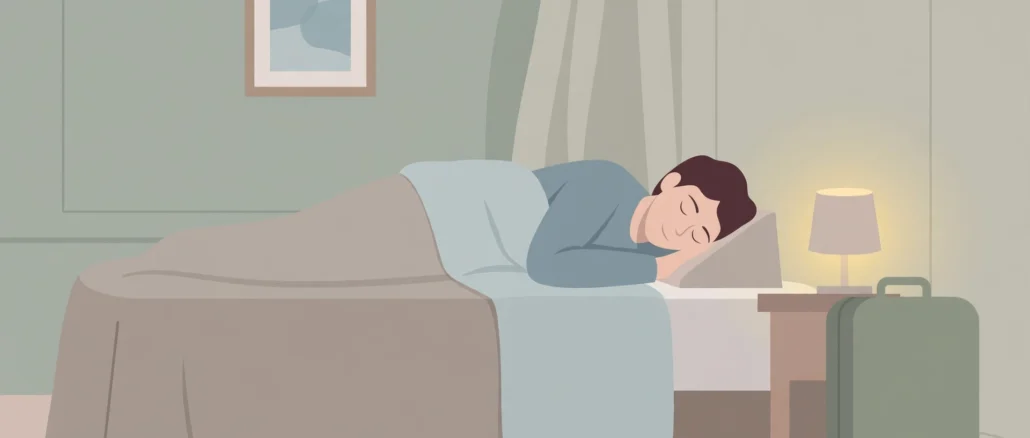
Reflux does not take a holiday. A new bed, a late dinner out, a long flight and a hotel room with a flat mattress can add up to a night of heartburn — and for many people with GERD, the first night away is the worst of the trip. The good news is that the same elevation that helps at home can travel with you, and hotels will usually help if you ask the right way.
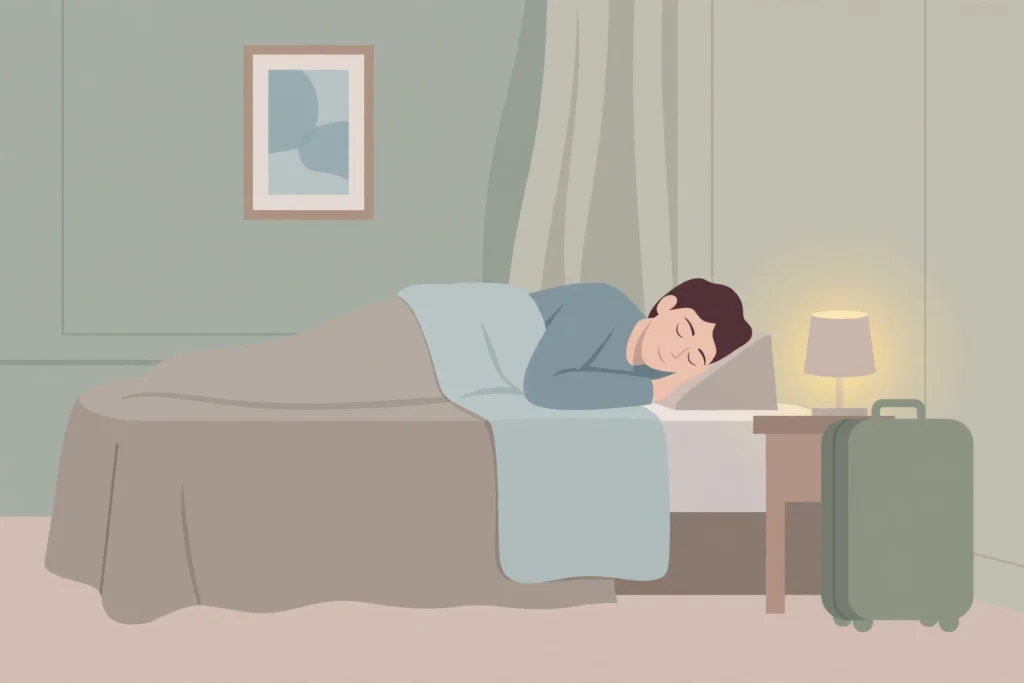
Can you take a wedge pillow travelling?
Yes — a small, light wedge travels well, and even if you leave yours at home, a hotel bed can usually be raised or propped enough to get you through the night. A 7.5-inch wedge is the most travel-friendly size: it fits in a large suitcase or a carry-on, weighs little, and still gives a useful incline. Larger 10- and 12-inch wedges work better at home but are bulky to pack, so most travellers either take the small one or improvise at the hotel.
What is the best portable wedge pillow for travel?
The best travel wedge is the one you will actually carry. That means a small footprint, a light weight, and a cover you can wash when you get home. A 7.5-inch wedge measuring about 24 by 24 inches is a good compromise: it lifts your whole upper body, it fits in a standard large suitcase, and it is light enough to carry through an airport without regret.
Inflatable wedges exist too, and they pack almost flat. They suit light packers, but they have trade-offs: they can feel less stable, they may slowly lose air overnight, and they need a pump or lung power at bedtime. Foam is the safer bet for most people, and memory foam toppers that fold or roll are a middle ground — they compress well but still give a real incline.
It depends on how you travel. If you drive, take your regular wedge — the car boot does not care about size. If you fly with checked luggage, a 7.5-inch foam wedge in a compression bag is realistic. If you fly carry-on only, an inflatable wedge or a hotel hack is the honest answer; a foam wedge will eat most of your bag.
How do you raise a hotel bed for reflux?
Ask the hotel first. Call ahead or ask at check-in for extra pillows, a spare blanket, or a second duvet — hotels keep spares, and most are happy to help. Four or five firm pillows stacked under your upper body can mimic a wedge, though pillows shift during the night, so build the stack wide and firm rather than tall and narrow.
A better hotel hack is to raise the head of the bed itself. Ask housekeeping for bed risers or spare blocks; some hotels have them for accessibility. In a pinch, a rolled-up spare blanket or a folded towel under the mattress at the head end lifts the whole sleeping surface a few inches — the goal is a gentle slope of the whole upper body, not just your head propped up on pillows. The Mayo Clinic’s guidance on managing heartburn without medication notes that raising the head of the bed by 6 to 9 inches can help, and that a wedge should elevate your whole upper body rather than just your head. That applies in a hotel room just as it does at home. (Source: Mayo Clinic, “7 ways to manage heartburn without medication” — https://www.mayoclinic.org/connected-care/7-ways-to-manage-heartburn-without-medication/cpt-20515431)
If the bed has a solid base and will not move, try sleeping on the side of the bed nearest the wall with your back against it, so you cannot slide down the slope as easily. And if the hotel has a recliner or an adjustable bed in a suite, ask — a short nap in a reclined chair can rescue a bad night.
What should you pack for reflux on a trip?
Pack for the three things that make travel reflux worse: late meals, lying flat too soon after eating, and unfamiliar food. Bring your usual antacid or prescribed medicine in your hand luggage, not in a checked bag. Keep a small snack you trust — plain crackers or a banana — for the hours when the only food available is rich or spicy.
A few practical items earn their space: a small travel pillow for the flight, a sleep mask and earplugs so a bad first night does not become a bad second night, and a zip bag for your wedge’s cover if it needs washing. If you use a wedge at home, take a photo of your home setup before you leave — it makes rebuilding the angle in a hotel room much quicker.
| Travel situation | Best option | Why it works |
|---|---|---|
| Driving | Your regular wedge | No size limit, same sleep as home |
| Flying, checked bag | 7.5-inch foam wedge | Fits a large suitcase, real incline |
| Flying, carry-on only | Inflatable wedge or hotel hack | Packs flat, no bulk |
| Hotel, no wedge packed | Extra pillows + raised bed head | Uses what the hotel already has |
| Overnight flight | Neck pillow + upright seat | Keeps you upright, not flat |
What else helps reflux while travelling?
Eat your biggest meal at lunch, not dinner, and leave two to three hours between your last meal and bedtime — the same timing that helps at home matters more when the bed is unfamiliar. Skip the late-night minibar snack, and be careful with the two usual suspects on holiday: alcohol and rich, late dinners. You do not need to avoid everything you enjoy, but a heavy meal at 10 p.m. followed by a flat hotel bed is the classic recipe for a bad night.
Sleep on your left side if you can. Lying on your left side keeps the stomach below the oesophagus, which makes it harder for acid to flow back up, and it works on a hotel mattress just as well as at home. If you wake with heartburn, sit up for a few minutes, sip water, and wait for it to settle before lying back down — lying flat again straight away usually brings it back.
This is general information, not medical advice. If your reflux is severe, frequent, or getting worse, or if you are travelling with a condition such as Barrett’s oesophagus, talk to your doctor before your trip and carry any prescribed medicine with you.
Frequently asked questions
Can I take a wedge pillow on a plane?
Yes. A small foam wedge counts as a personal item or fits in checked luggage, and an inflatable wedge packs flat in a carry-on. Airlines do not restrict pillows, but a 12-inch foam wedge is too bulky for a carry-on, so pack the 7.5-inch size or an inflatable one.
Do hotels provide wedge pillows?
Rarely, but it costs nothing to ask. Most hotels will provide extra pillows, blankets, or bed risers on request, and some keep foam wedges for guests with medical needs. Call ahead rather than asking at midnight — housekeeping can prepare the room before you arrive.
Is it safe to sleep propped up on pillows in a hotel?
For adults, sleeping with the upper body raised on pillows is a common reflux strategy and is generally fine for a few nights. The key is to raise your whole upper body, not just your head — a stack that bends your neck forward can make things worse. If you have breathing problems or sleep apnoea, check with your doctor before changing your sleep position.
What if my reflux is worse on the first night away?
That is very common. New beds, different food, later meals and travel stress all add up. The first night is usually the worst, and it often improves once you have rebuilt your usual elevation and meal timing. If it does not improve after two or three nights, use your usual medicine and consider whether the hotel bed itself is the problem — ask to change rooms or for a firmer mattress topper.
Product details last verified November 16, 2026. Sources: Mayo Clinic heartburn guidance; our wedge pillow height guide (https://www.bestwedgepillows.com/wedge-pillow-heights-explained-7-5-vs-10-vs-12-inches-for-reflux/). See also the homepage (https://www.bestwedgepillows.com/) for our full comparison of reviewed wedges.