
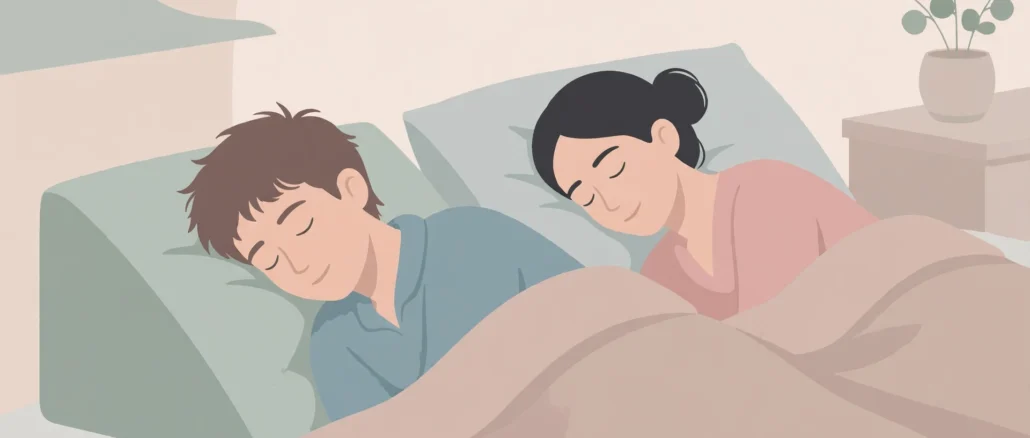
Snoring keeps two people awake, and the snorer is often the one who hears about it last. A wedge pillow is one of the cheapest things people try — but does raising your upper body actually quiet snoring, or is it just a more expensive way to sleep badly? The honest answer is that it helps some snorers a lot, and others barely at all, and the difference comes down to why you snore.
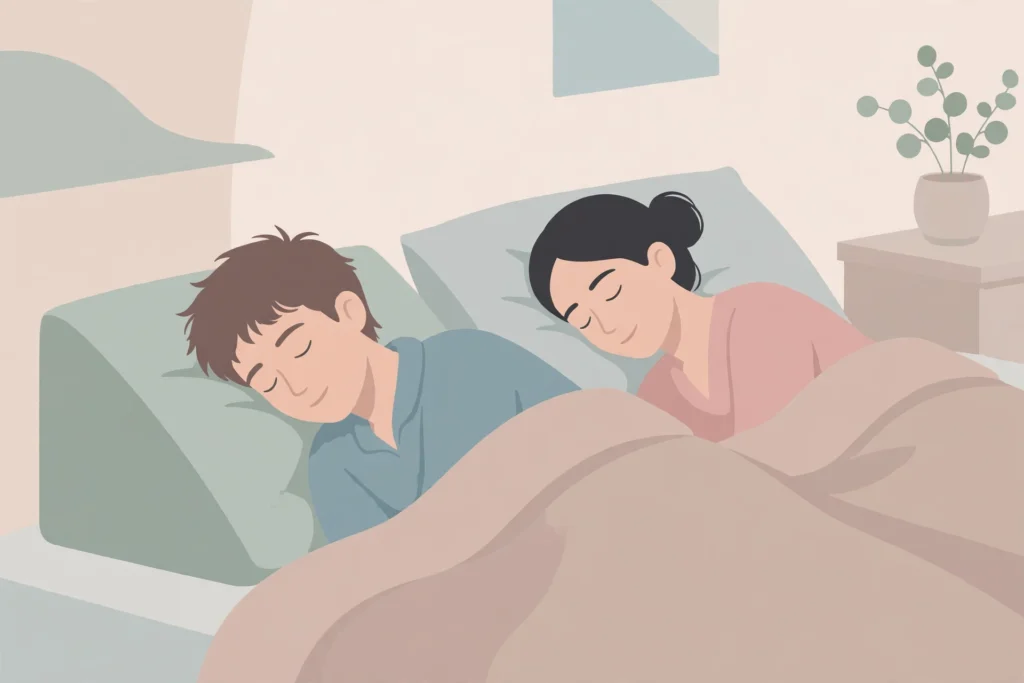
Can a wedge pillow help snoring?
Yes, a wedge pillow can help snoring when the snoring is positional — that is, when it happens mainly on your back and eases on your side. Raising the upper body and discouraging back-sleeping keeps the tongue and soft tissues from falling back into the airway, which is the mechanism behind much ordinary snoring. It will not fix snoring caused by nasal blockage, alcohol, or sleep apnea, and it is not a treatment for apnea.
Why snoring happens in the first place
Snoring is the sound of air forcing its way past relaxed tissue in the airway. When you sleep on your back, gravity pulls the tongue and soft palate backward, narrowing the airway; the tissue vibrates as air passes, and that vibration is the snore. Anything that narrows the airway further — congestion, alcohol relaxing the throat muscles, extra tissue, or sleeping flat on your back — tends to make it louder. A wedge pillow attacks only one part of that chain: position. That is why it works well for some people and does nothing for others, and why honest advice about wedges has to start with the cause, not the product.
What the evidence actually says, as of October 2026
The evidence for positional therapy — changing sleep position to keep the airway open — is strongest for people whose breathing problems are worse on their back than on their side. The Sleep Foundation notes that side sleeping is typically the recommended position for sleep-related breathing problems including snoring, and that back sleeping generally has the most negative effects on breathing: https://www.sleepfoundation.org/sleeping-positions/best-sleeping-position-for-breathing-problems
That distinction matters for wedges. A wedge pillow does two things at once: it elevates the upper body, and it makes back-sleeping less comfortable, nudging you toward your side. Reviews of positional therapy find meaningful reductions in breathing events for position-dependent cases, but the effect is concentrated in that group — people who snore in every position, or who stop breathing during sleep, are a different case and need a different answer. The evidence base for pillows specifically is thinner than for positional therapy in general: most studies are small, and results vary, so any claim that a wedge “stops snoring” for everyone is overselling it.
Who a wedge pillow helps, and who it does not
| Snoring mainly on your back, quieter on your side | Yes — this is the classic positional case. |
| Mild snoring plus nighttime reflux | Yes — elevation helps both, and reflux itself can worsen snoring. |
| Snoring in every position, or with nasal blockage | Unlikely on its own — the blockage needs its own fix. |
| Loud snoring with pauses in breathing, gasping, or daytime sleepiness | No — see a clinician; this may be sleep apnea. |
| Snoring after alcohol, or with a cold | Partly — the wedge may soften it, but the cause is temporary. |
This is the “it depends” verdict in plain terms: a wedge is a good first step for positional, mild snoring, and a poor substitute for medical assessment when the warning signs of apnea are present.
How to choose a wedge for snoring
If you decide to try one, the details matter more than the brand. First, choose a wedge that elevates your whole upper body, not just your head — bending only the neck can narrow the airway further and make snoring worse, which is why a long, gradual wedge beats a tall, short one. Second, pick a height you can actually sleep on: our heights guide compares 7.5, 10 and 12-inch wedges and the trade-off between gentleness and elevation — https://www.bestwedgepillows.com/wedge-pillow-heights-explained-7-5-vs-10-vs-12-inches-for-reflux/ . A steep wedge you abandon after three nights helps no one. Third, if you are mainly a side sleeper, look for a wider wedge or one with a shoulder cutout, since a narrow wedge can crowd the shoulder. Finally, give it two weeks: positional change takes time to become habit, and one night is not a fair test.
Other things that help, alongside a wedge
A wedge works best as part of a small set of changes, not as a single fix. Sleeping on your side (a body pillow behind you can hold the position), avoiding alcohol in the hours before bed, treating congestion, and keeping a regular sleep schedule all reduce snoring for many people. If reflux is part of the picture, elevation helps there too — which is why many of our wedge guides cover reflux and snoring together. For severe reflux, a steep torso wedge such as the one in our Welzona review can be the right tool — https://www.bestwedgepillows.com/welzona-12-inch-bed-wedge-pillow-review/ — but for snoring alone, a gentler height is usually the better starting point. Our main guide to wedge pillows for acid reflux, GERD and heartburn is at https://bestwedgepillows.com/ .
When a pillow is not enough
Get medical advice promptly if a partner has seen you stop breathing during sleep, if you wake gasping or with morning headaches, or if you are sleepy all day despite a full night in bed. Those are signs of possible sleep apnea, and a pillow is not a treatment for it — effective treatments exist, and they start with a sleep assessment, not a purchase. The same applies if snoring starts suddenly, is paired with chest pain, or follows a significant weight change. A wedge can still be part of your sleep setup afterward, but only alongside proper assessment.
Frequently asked questions
Does a wedge pillow stop snoring completely?
Not usually. For positional snorers it often reduces snoring noticeably, but “stops completely” is the wrong expectation — think quieter and less frequent, not silent.
Is a wedge pillow better than a regular pillow for snoring?
For back snorers, yes, because it elevates the whole upper body and discourages back-sleeping. A regular pillow only raises the head, which can bend the neck and leave the airway just as narrow.
How long should I try a wedge before deciding?
Give it about two weeks of nightly use. The first few nights feel strange for most people, and position habits take time to change.
Can a wedge pillow replace a CPAP machine?
No. A wedge is not a treatment for sleep apnea and must never replace prescribed therapy. If you use CPAP, talk to your clinician about wedge use alongside it.
The bottom line
A wedge pillow is a reasonable, low-cost first step if your snoring is mild and mainly happens on your back — and a poor investment if your snoring comes with pauses in breathing or daytime sleepiness, where a clinician is the right first step. Match the tool to the cause, choose a height you will actually sleep on, and judge it after two weeks, not one night.
This is general information, not medical advice. If you have concerns about snoring or sleep apnea, speak to a clinician.