

Waking up with a headache is miserable, and it is also common: around 5% of people wake with a morning headache, according to the Sleep Foundation. The cause is often in the bedroom rather than in your head — the way you slept, how you breathed, whether you ground your teeth, and whether your pillow held your neck straight.
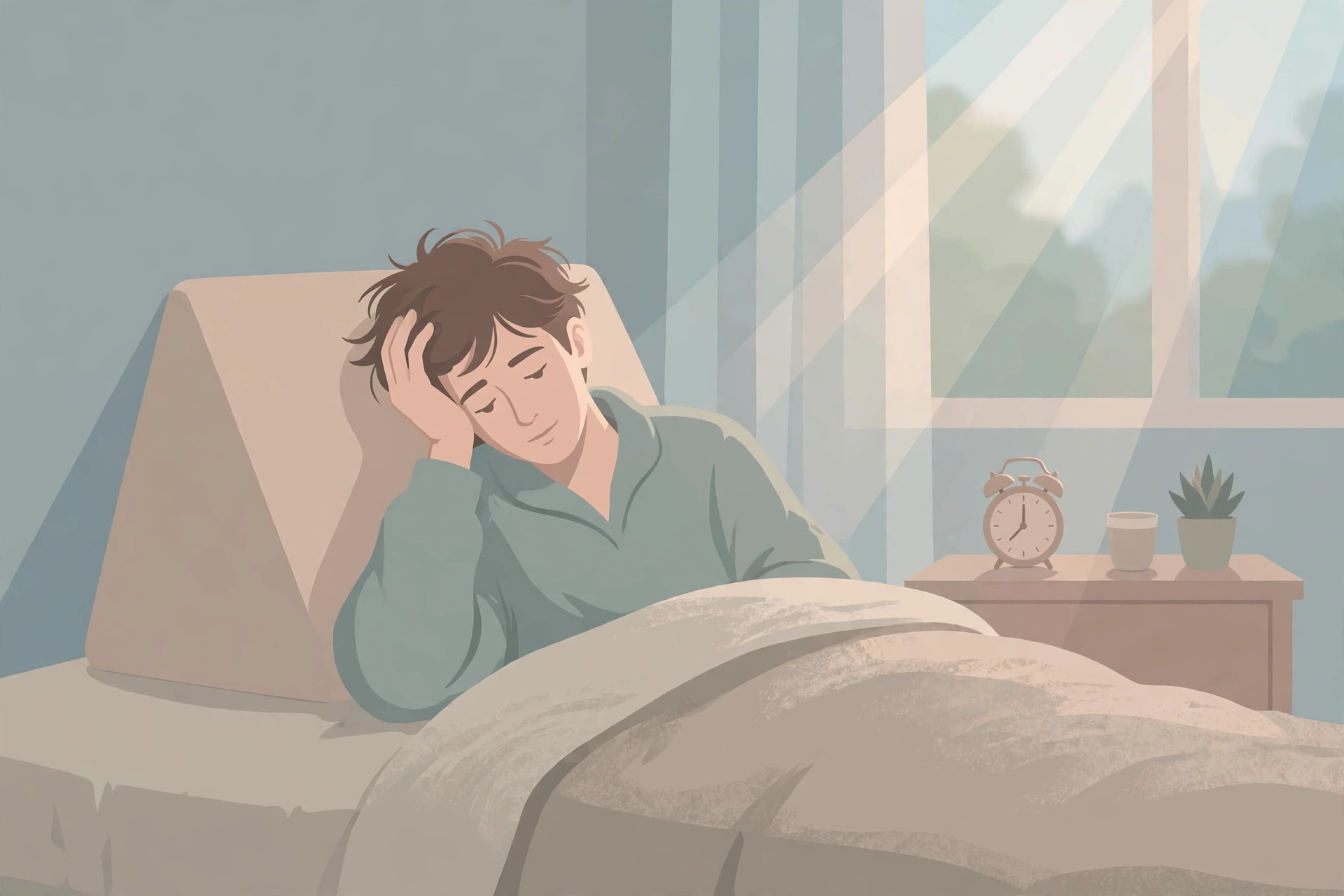
Why do I wake up with a headache?
Most morning headaches come from one of four sleep-related causes: a neck strained by poor sleep position or the wrong pillow height, disrupted breathing from snoring or sleep apnea, teeth grinding overnight, or simply too little sleep. A headache that fades within a couple of hours and follows a bad night usually points to one of these — but a headache that is new, severe, or keeps coming back deserves a doctor’s attention.
If a wedge pillow is part of your sleep setup, the height matters more than most people realise. See our review of the Ruqmuis 10-inch wedge pillow, a mid-height wedge that suits back sleepers who need a steady incline without going to the steepest height.
Which sleep positions cause morning headaches?
The position you sleep in decides how much strain your neck carries for seven or eight hours, and that strain is the most direct route from sleep to a morning headache.
Stomach sleeping is the worst offender. Lying face down forces you to twist your neck sharply to one side to breathe, which compresses one side of the neck and leaves the muscles tight and inflamed by morning. That tension radiates upward into the head as a dull, pressure-like headache. If you naturally end up on your front, a small pillow under your pelvis helps keep your spine closer to neutral.
Back sleeping is usually the kindest position for spinal alignment, but it still causes headaches when the pillow is wrong. Too high and your neck bends forward all night; too low and your head falls back, stretching the front of the neck. Back sleeping is also the position most likely to worsen snoring and sleep apnea, which brings its own headache mechanism — covered below.
Side sleeping is generally the best position for headache prevention, because it promotes healthy spinal alignment and keeps the airway more open. The catch is shoulder width: if your pillow is too thin, your head drops toward the mattress and your neck bends sideways for hours. Side sleepers need a pillow thick enough to fill the gap between ear and shoulder. Our guide for side sleepers with reflux covers the shoulder problem in detail.
Can snoring and sleep apnea cause morning headaches?
Yes, and this is the cause most people miss. Obstructive sleep apnea (OSA) is a sleep-related breathing disorder that causes repeated pauses in breathing through the night. People with OSA are up to three times more likely to experience morning headaches than people without it, according to the Sleep Foundation, and researchers estimate that up to 18% of people with OSA have sleep apnea headaches — newer data suggests it may affect as many as 1 in 3.
The mechanism is not fully settled, but the leading explanation is carbon dioxide. During apnea events, breathing stops or becomes severely reduced, so carbon dioxide accumulates in the blood overnight. Elevated carbon dioxide widens the blood vessels in the brain, which raises pressure inside the head — a well-established headache mechanism. The repeated disruptions also fragment sleep, and poor sleep quality on its own raises headache risk.
A sleep apnea headache is usually a dull pressure on both sides of the head that starts soon after waking and improves within a few hours, often with loud snoring, breathing pauses noticed by a partner, or daytime sleepiness. If that combination sounds familiar, mention it to a doctor — a wedge pillow is not a treatment for sleep apnea and never replaces CPAP. Our sleep apnea guide and snoring guide explain what a wedge can and cannot do.
What about teeth grinding?
Sleep bruxism — grinding or clenching your teeth during sleep — is another common cause of morning headaches, and it is easy to miss because you are asleep when it happens. The clenching strains the jaw muscles and the temples, and you wake with a dull ache in the temples, a sore jaw, or teeth that feel tender. Grinding often travels with sleep apnea: when the airway collapses, the brain clenches the jaw to help reopen it. If you wake with jaw soreness alongside the headache, a dentist can check for wear on your teeth, and a doctor can check whether apnea is part of the picture.
Can the wrong pillow height cause a morning headache?
Yes. Your pillow’s job is to keep your head, neck and spine in a straight line — what sleep experts call the midline position. When the pillow is too high or too low, your neck spends the night bent or twisted, the muscles tighten, and the tension becomes a headache by morning.
This is where a wedge pillow can help or hurt, depending on the height. A gentle 7.5-inch wedge suits people who want a slight lift; a 10-inch wedge suits moderate reflux and snoring; a 12-inch wedge is steep and suits severe reflux or upright reading, but it can strain the neck of a back sleeper who is not used to it. Our wedge pillow heights guide compares 7.5, 10 and 12 inches so you can match the height to your problem instead of guessing.
Morning headache causes at a glance
| Cause | How it shows up | What helps |
|---|---|---|
| Stomach sleeping | Dull pressure headache, stiff neck, one-sided soreness | Sleep on your side or back; small pillow under the pelvis if you roll onto your front |
| Wrong pillow height | Headache with neck stiffness, worse on the side you slept on | Match pillow thickness to your sleep position; try a wedge at the right height |
| Snoring / sleep apnea | Dull pressure on both sides, fades within hours; loud snoring, daytime sleepiness | Mention it to a doctor; a wedge is not a treatment for apnea |
| Teeth grinding | Temple ache, sore jaw, tender teeth | Dentist check for tooth wear; doctor check for apnea |
| Too little sleep | Headache after a short or broken night, worse with stress | Regular sleep hours; a dark, cool bedroom |
When should you see a doctor?
Most morning headaches linked to sleep position improve once the position or the pillow changes. See a doctor promptly if the headaches are new and frequent, if they are severe or the worst you have ever had, if they come with vision changes, weakness, confusion or a stiff neck, or if they do not improve after a few weeks of better sleep habits. Mention loud snoring, breathing pauses or daytime sleepiness specifically — those details point a doctor toward sleep apnea.
It depends: which fix fits your mornings?
There is no single fix, because the cause decides the fix. If your neck is stiff and the headache sits on one side, the position or the pillow is the likeliest culprit — try side sleeping with a pillow that fills the shoulder gap, or a wedge at the right height. If the headache is a dull pressure on both sides and your partner reports snoring or breathing pauses, the breathing is the likelier cause and a doctor’s visit matters more than a new pillow. If your jaw aches as well, grinding is in the picture and a dentist should be part of the answer. Change one thing at a time, give it a week, and note which mornings improve.
This is general information, not medical advice. It cannot diagnose the cause of your headaches. If your headaches are frequent, severe, new, or come with other symptoms, speak to a doctor.
See all our wedge guides on the homepage.
Sources: Sleep Foundation, “Can Sleep Apnea Cause Morning Headaches?” — https://www.sleepfoundation.org/sleep-apnea/sleep-apnea-headaches — and Mayo Clinic heartburn guidance on head-of-bed elevation — https://www.mayoclinic.org/connected-care/7-ways-to-manage-heartburn-without-medication/cpt-20515431 — both checked as of November 2026.
FAQ
Can sleeping on my stomach really cause a headache? Yes. Lying face down twists your neck to one side for hours so you can breathe, which strains the neck muscles and can trigger a tension-type headache by morning. Side or back sleeping keeps the neck straighter.
How do I know if my morning headache is from sleep apnea? Usually a dull pressure on both sides of the head that starts soon after waking and fades within a few hours. If it comes with loud snoring, breathing pauses, waking up gasping, or daytime sleepiness, mention it to a doctor — those are the signs that point toward apnea.
Can a wedge pillow stop morning headaches? It can help when the cause is neck strain from a flat or wrong-height pillow, because a wedge at the right height keeps the head, neck and spine aligned. It cannot treat sleep apnea or teeth grinding, and a wedge that is too steep can make neck strain worse.
What pillow height is best if I wake up with headaches? Side sleepers need a pillow thick enough to fill the gap between ear and shoulder. Back sleepers usually do best with a gentle to medium incline — a 7.5-inch or 10-inch wedge — rather than the steepest 12-inch height. Start lower and step up only if you need more elevation.