

Pregnancy heartburn has a cruel timing problem: it is worst at night, when you are lying flat, and the growing uterus is pressing upward on your stomach. A wedge pillow can help, but only if it is placed the right way — and in pregnancy, the right way is not the same as the usual back-sleeper setup.
Is a wedge pillow safe for pregnancy heartburn?
Yes, for most pregnancies, when it is used for gentle upper-body elevation and side support — not for sleeping flat on your back at a steep angle. Sleep mainly on your left side, raise your whole upper body on a gentle slope, support your belly and knees, and keep the incline modest enough that you can actually sleep on it all night.
For the wedge heights that pair with this position, see our bed wedge overview: https://www.bestwedgepillows.com/bed-wedges/
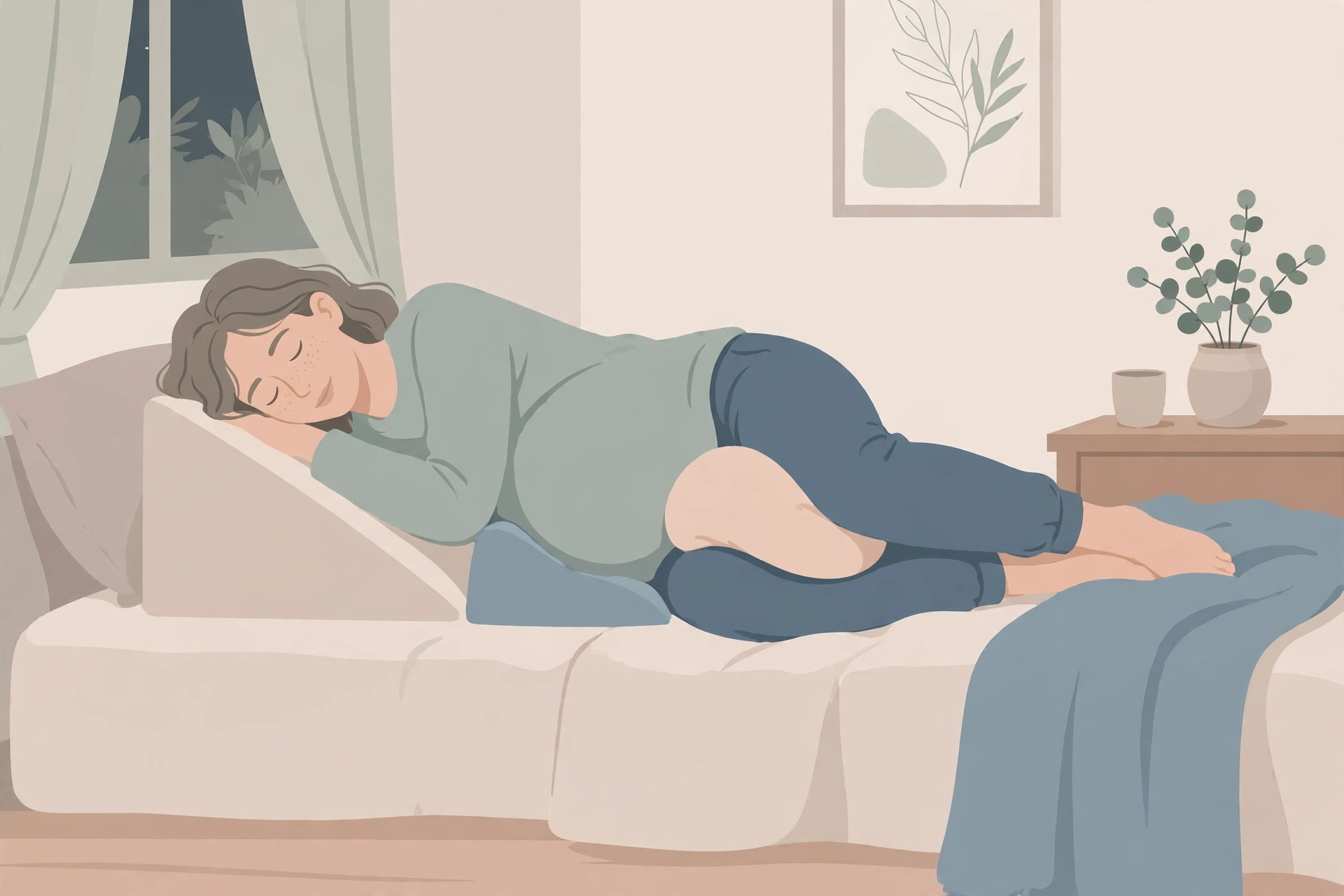
Why pregnancy heartburn gets worse at night
Two changes work together, as of November 2026. The hormone progesterone relaxes the valve between the oesophagus and the stomach, so acid escapes more easily. At the same time, the growing uterus pushes the stomach upward and crowds it. Lying flat removes gravity’s help entirely, which is why heartburn that is manageable during the day can wake you at 2 a.m. A wedge pillow is a positioning aid: it uses gravity to keep stomach contents lower than the oesophagus. It does not treat reflux disease, and it does not replace advice from your own clinician or midwife.
The safe position, in plain terms
A wedge pillow is a triangular foam slope that raises the upper body. A pregnancy wedge is a smaller, firmer wedge used for targeted support — under the belly, behind the back, or between the knees. For heartburn, the two jobs are different, and you may use both.
First, elevate the whole torso, not just the head. The slope should start around the waist or mid-back and lift the chest and shoulders together. Raising only the head with stacked pillows bends the neck, folds you at the waist, and can increase pressure on the stomach — the opposite of what you want.
Second, favour the left side. On the left side, the junction between the oesophagus and the stomach tends to sit above the pool of stomach contents, so acid is less likely to flow upward. Guidance from the American College of Obstetricians and Gynecologists (ACOG) also recommends side sleeping in the second and third trimesters, because lying flat on your back can compress a major blood vessel. The left side is a preference, not a strict rule: if you wake up on your right side or on your back, simply roll back to your side — do not lie awake worrying about it.
Third, keep the incline gentle. Guidance commonly quoted for reflux, including from the American College of Gastroenterology, is to raise the head of the bed by about 4 to 6 inches. A moderate wedge of around 7.5 inches is a sensible starting point for most pregnant sleepers. A steep 12-inch wedge is harder to stay on, especially on your side, and comfort is what decides whether you use it nightly.
A setup that works, step by step
- Put the main wedge under your upper body, low edge toward your waist, so your shoulders and head rest on the slope and your hips stay roughly level.
- Lie on your left side, with a thin, ordinary pillow on top of the wedge if your neck needs it.
- Tuck a small wedge or a folded pillow under your belly so the bump is supported, not hanging.
- Put a pillow between your knees to keep your hips aligned and take pressure off your lower back.
- If you tend to roll onto your back, place a pillow or wedge behind your back as a gentle barrier.
If the wedge slides, put a non-slip mat under it, or pull a fitted sheet over the wedge and mattress together — the same fix covered in our guide to stopping sliding: https://www.bestwedgepillows.com/how-to-stop-sliding-down-a-wedge-pillow-at-night/
What changes by trimester
| Trimester | Main problem | Wedge setup |
|---|---|---|
| First trimester | Hormonal heartburn, often before the bump shows | A gentle torso wedge for elevation; side sleeping is not yet a safety requirement |
| Second trimester | Heartburn plus a growing bump and hip ache | Left-side sleeping, torso wedge, belly support, pillow between the knees |
| Third trimester | Strongest heartburn, breathlessness, and difficulty staying on your side | The full setup above, plus a back barrier; a semi-reclined rest position in the day if lying flat is uncomfortable |
It depends: who this fits, and who it does not
This guide fits you if your heartburn is worse lying flat, you are in the second or third trimester, and you can sleep comfortably on your side with support. It fits less well if you are mainly a back sleeper who cannot settle on your side, if you have a shoulder injury that makes side sleeping painful, or if your symptoms are severe, daily, or new. In those cases, talk to your provider before relying on a pillow. A wedge also does not fix heartburn caused mainly by late meals or trigger foods — see the habits below — and it is not a substitute for treatment if you need it.
Evening habits that make the wedge work better
Eat your last substantial meal at least 2 to 3 hours before bed, as of November 2026 guidance, and keep evening portions smaller. Common triggers include fatty or fried food, spicy food, citrus, chocolate, and fizzy drinks, but triggers vary — your own pattern matters more than any list. Avoid lying down straight after eating, and wear loose clothing around your waist in the evening. Do not start or stop any heartburn medicine on the basis of a blog post: ask your provider which options are suitable in your pregnancy.
When to ask your provider promptly
Seek advice promptly for difficulty swallowing, vomiting, unexplained weight loss, black stools, severe or persistent abdominal pain, or heartburn that does not improve with positioning and the habits above. Those symptoms need a clinician’s assessment, not a different pillow. This is general information, not medical advice.
Frequently asked questions
Can I use a wedge pillow throughout pregnancy?
Yes, in the setups above. In the first trimester, use it for gentle elevation. From the second trimester onward, combine it with side sleeping and belly and knee support, as described.
Is it safe to sleep on my back if I am propped up on a wedge?
A wedge does not make prolonged flat back sleeping safe in later pregnancy. If you are in the second or third trimester, aim to fall asleep on your side, even when elevated, and roll back to your side if you wake up on your back.
What height wedge is best for pregnancy heartburn?
Start gentle — around 7.5 inches, or a 4 to 6-inch head-of-bed rise — and go steeper only if nighttime heartburn persists and you can still sleep comfortably on it. The height you sleep on all night beats a steeper one you abandon.
Will a wedge pillow cure pregnancy heartburn?
No. It may reduce nighttime symptoms for many people by using gravity and position. It does not treat the underlying hormonal and pressure causes, which usually ease after birth.
Sources: the American College of Obstetricians and Gynecologists FAQ on problems of the digestive system (https://www.acog.org/womens-health/faqs/problems-of-the-digestive-system), Mayo Clinic guidance on managing heartburn without medication (https://www.mayoclinic.org/connected-care/7-ways-to-manage-heartburn-without-medication/cpt-20515431), and our side-sleeper guide (https://www.bestwedgepillows.com/best-wedge-pillow-for-side-sleepers-with-acid-reflux-solving-the-shoulder-problem/). This is general information, not medical advice. If reflux is frequent, severe, or new, speak to a clinician before changing how you sleep.